
- Schedule a Visit
- The Molecular Backbone: Silicon-Oxygen vs. Carbon-Carbon
- Low Glass Transition Temperature: Staying Flexible in the Cold
- Real-World Performance: Where Temperature-Resistant Silicone Excels
- Choosing the Right Silicone for Your Temperature Needs
- Why Temperature Resistance Leads to Better Purchasing Decisions
- Frequently Asked Questions (FAQ)
Pull a silicone baking mat from a 450°F oven, or start a car engine on a -40°F winter morning. In both cases, silicone components keep working—flexible, stable, and intact. Ordinary rubber would crack in the cold or melt under heat. Plastics would soften or become brittle. So what makes silicone different?
The answer lies in the unique chemistry of organic silicon. Understanding this science helps you choose the right silicone material for your products, whether you manufacture kitchenware, automotive parts, or medical devices. And when you source from an experienced manufacturer like Xinguang Yirun, you get consistent temperature resistance backed by proven quality.

The Molecular Backbone: Silicon-Oxygen vs. Carbon-Carbon
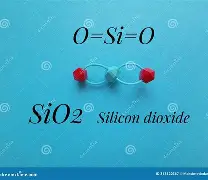
Every material‘s temperature limits begin at the molecular level. Ordinary rubber and most plastics have backbones made of carbon atoms linked by carbon-carbon (C–C) bonds. Silicone, however, has a backbone of alternating silicon and oxygen atoms—called the siloxane bond (Si–O–Si).
Stronger Bonds Mean Higher Heat Resistance
The Si–O bond has a dissociation energy of about 106 kcal/mol. The C–C bond sits around 83 kcal/mol. That difference means silicone needs significantly more energy to break its molecular chains. As a result, silicone rubber can withstand continuous service temperatures from -55°C up to 230°C, and even higher for short periods. Ordinary rubber begins to lose its properties above 100°C.
Chemical Inertness Adds Stability
Beyond bond strength, the silicon-oxygen backbone resists chemical attack from water, oxygen, ozone, and many acids. This inertness means silicone does not easily oxidize or degrade when exposed to UV light and high heat, unlike carbon-based rubbers that become sticky, hard, or cracked after prolonged use.
Low Glass Transition Temperature: Staying Flexible in the Cold
Heat resistance is only half the story. Many materials that survive high temperatures become glass-hard and brittle when frozen. Think of a plastic cup left in a freezer—it shatters when dropped. Silicone does not.
What Is the Glass Transition Temperature (Tg)?
The glass transition temperature is the point at which a polymer changes from a flexible, rubbery state to a hard, glassy state. Most rubbers have Tg values above -20°C, meaning they stiffen noticeably in freezing conditions. Silicone has an exceptionally low Tg, typically between -120°C and -50°C depending on formulation. That is why silicone oven mitts remain pliable even after being stored in a cold drawer, and why silicone gaskets in arctic equipment continue to seal effectively.
Practical Advantage for End Users
For product designers and manufacturers, this low-Tg property means you can trust silicone components in refrigerated transport, outdoor winter sports equipment, and cold-climate automotive systems. Your customers will experience fewer failures due to cold cracking or seal leakage.
Real-World Performance: Where Temperature-Resistant Silicone Excels
Understanding the molecular science is useful, but what really matters is how silicone performs in actual applications. Here are three industries where temperature resistance makes silicone the material of choice.
Kitchenware and Bakeware
Silicone baking mats, muffin cups, and spatulas go directly from freezer to oven without damage. A silicone baking mat withstands continuous use at 260°C (500°F) and can be chilled to -40°C immediately after. No cracking, no melting, no loss of non-stick properties. Xinguang Yirun‘s food-grade silicone meets FDA and LFGB standards, ensuring safety at extreme temperatures.
Automotive and Engine Components
Engine compartments experience rapid temperature swings—from cold start at -30°C to full operating heat over 200°C. Silicone hoses, gaskets, and seals maintain flexibility and sealing pressure across this range, preventing coolant and oil leaks. That is why premium automotive manufacturers specify silicone for turbocharger ducts, radiator hoses, and spark plug boots.
GET IN TOUCH
Schedule a Visit
Medical and Industrial Equipment
Medical devices that require sterilization often face repeated steam cycles at 134°C. Silicone withstands autoclaving without degrading, while also remaining soft against patient skin. Similarly, industrial ovens and food processing lines rely on silicone seals and tubing that never harden or release toxic fumes.
Choosing the Right Silicone for Your Temperature Needs
Not all silicones are identical. Different formulations offer different temperature ranges, mechanical properties, and certifications. When you purchase silicone materials, consider these factors.
Standard vs. High-Temperature Formulations
General-purpose liquid silicone rubber (LSR) is rated for -50°C to 230°C. High-temperature grades with special fillers or additives can handle 260°C continuously and 300°C for short periods. If your application involves direct contact with a heat source like a frying pan or exhaust manifold, specify a high-temperature formulation.
Low-Temperature Specialty Grades
For arctic environments or liquid nitrogen handling, some silicone formulations maintain flexibility down to -100°C. These grades are often used in aerospace seals and cryogenic equipment. Contact Xinguang Yirun to discuss custom temperature requirements.
Certification Matters for End-Use Safety
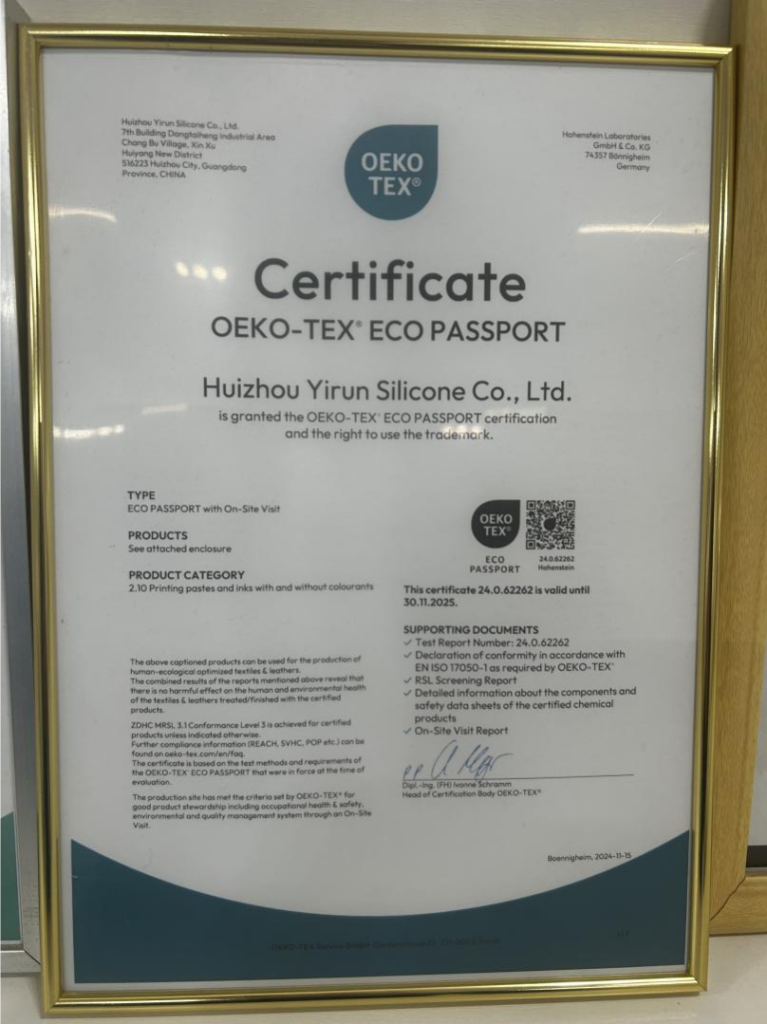
Food-grade silicone must pass migration testing to ensure no harmful substances leach at high temperatures. Medical-grade silicone requires ISO 10993 biocompatibility. Xinguang Yirun’s silicone products carry OEKO-TEX, REACH, and ROHS certifications, giving you confidence when selling to regulated markets.
Why Temperature Resistance Leads to Better Purchasing Decisions
When you buy silicone products—or when you manufacture components using silicone materials—the temperature range directly affects product lifespan, safety, and customer satisfaction. A silicone spatula that melts at 200°C is not a bargain; it is a liability. A silicone gasket that hardens at -10°C will leak in winter.
For Businesses Sourcing Silicone
If you run a manufacturing or printing operation, selecting a supplier with proven temperature consistency matters. Xinguang Yirun has produced premium liquid silicone rubber and silicone inks for eighteen years, with in-house testing for heat aging, UV yellowing, and low-temperature flexibility. Every batch is tested before shipment, so you receive materials that perform exactly as specified.
For End Users Buying Finished Goods
Look for products clearly labeled as “100% silicone” (not silicone blends), and check the rated temperature range on packaging or product descriptions. Avoid silicone items that smell strongly of chemicals—that indicates fillers or low-grade polymers that will fail under heat. Genuine high-quality silicone is odorless after curing and remains flexible across extremes.
Frequently Asked Questions (FAQ)
Q1: What is the maximum temperature silicone can handle?
A: High-quality silicone rubber can withstand continuous service at 230°C (446°F) and short-term exposure up to 300°C (572°F). Special high-temperature formulations can reach 315°C. For comparison, ordinary rubber typically fails above 120°C. Always check your supplier’s technical data sheet for exact ratings.
Q2: Does silicone become brittle in freezing temperatures?
A: No. Unlike many rubbers that stiffen below 0°C, silicone stays flexible down to approximately -55°C. Specialty low-temperature formulations remain elastic at -100°C. This is due to silicone’s very low glass transition temperature.
Q3: Can I use silicone bakeware under a broiler?
A: Most silicone bakeware is safe under a broiler for short periods, but you should verify the product’s maximum temperature. Silicone baking mats are typically safe to 260°C (500°F), but direct flame contact will damage any polymer. For broiler use, stay within the manufacturer’s recommended temperature limit.
Q4: Why does some silicone melt or discolor in the oven?
A: That silicone likely contains filler materials (such as calcium carbonate or silica dust) that degrade at high temperatures. Pure, high-grade silicone does not melt or discolor under normal oven use. Choose products from certified suppliers like Xinguang Yirun to ensure purity.
Q5: How can I test if a silicone product is authentic and temperature-resistant?
A: Perform a simple burn test. Hold a small piece of the silicone with tweezers over a lighter flame for 10 seconds. Authentic silicone will produce white ash and a slight sandy odor, but no black smoke. Filled or fake silicone gives off thick black smoke and an acrid, chemical smell. (Do this only in a well-ventilated area.)
Q6: Does Xinguang Yirun offer custom silicone formulations for extreme temperatures?
A: Yes. Xinguang Yirun’s R&D team can develop custom liquid silicone rubber (LSR) formulations for specific high-heat or low-temperature applications. Contact their team through the website inquiry form to discuss your requirements.