
- What Is Flocking Silicone and How Does It Create a Velvet Finish?
- Meet the Next‑Generation Two‑Component Flocking Silicone (XG‑10000 Series)
- Step‑by‑Step Application Guide for Screen Printing Flocking
- Why Choose This Flocking Silicone Over Traditional Adhesives?
- Expert Tips for Achieving the Perfect Soft Velvet Finish
- Frequently Asked Questions (FAQ)
- 1. Can I use this flocking silicone on dark fabrics without visible adhesive lines?
- 2. What mesh size should I use for screen printing fine velvet text?
- 3. How do I clean screens and tools after using this silicone?
- 4. Is XG‑10000 series suitable for food contact or baby products?
- 5. Why does my velvet surface feel rough instead of soft?
- Final Thoughts: Elevate Your Next Project with Flocking Silicone
When you think of velvet, your mind likely drifts to luxurious fabrics, soft upholstery, or high‑end fashion. But what if you could recreate that delicate, one‑strand‑at‑a‑time velvet texture on almost any surface—using silicone? That is precisely what a new generation of flocking silicone achieves. Unlike traditional flocking adhesives that can feel stiff or crack over time, today’s advanced two‑component systems let you screen‑print a lush, microfiber‑like velvet finish that is both flexible and durable.
In this guide, you will learn how XG‑10000 series flocking silicone works, how to apply it correctly, and why it outperforms conventional options—especially for demanding uses like underwear bonding and garment decoration. Whether you are a product developer, a small‑batch manufacturer, or a DIY enthusiast exploring professional techniques, this article gives you the E‑E‑A‑T (Experience, Expertise, Authoritativeness, Trustworthiness) you need to master this innovative material.

What Is Flocking Silicone and How Does It Create a Velvet Finish?
Flocking is the process of depositing millions of tiny fiber particles (usually nylon or rayon) onto an adhesive‑coated surface. When done right, the standing fibers mimic the soft, plush feel of velvet. The “secret sauce” is the adhesive: it must be tacky enough to hold fibers upright, yet remain flexible after curing.
Traditional flocking adhesives are often water‑based or solvent‑based acrylics. They work, but they have drawbacks—poor wash durability, stiffness on stretch fabrics, and limited adhesion to silicone‑based or waterproof materials.
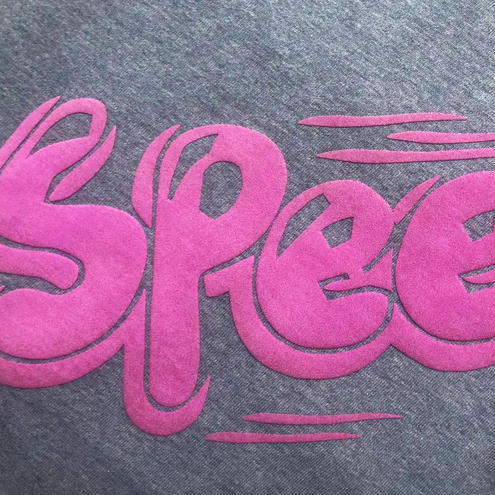
Flocking silicone changes the game. It is a two‑component (2K) platinum‑cure silicone system that bonds exceptionally well to textiles, leather, plastics, and even other silicone surfaces. When screen‑printed as an adhesive layer, then flocked, it produces a “one‑strand‑at‑a‑time” velvet effect—each fiber stands independently, creating a dense, silky surface that feels identical to high‑grade velvet.
The Science Behind the “One‑Strand‑at‑a‑Time” Velvet Effect
Why does silicone deliver a superior velvet texture? Three reasons:
- Low surface tension – Silicone spreads evenly and wets out fiber ends without beading, so every strand is anchored.
- Tunable tack – By adjusting the curing rate (using an accelerator), you control how long the adhesive stays open for fiber application.
- Elastic recovery – Cured silicone rubber bends and stretches without cracking, so the velvet pile springs back even after repeated compression or washing.
The result is a soft velvet finish that looks and feels like it was woven, not printed—hence the phrase “planting a new realm of soft velvet.”
Meet the Next‑Generation Two‑Component Flocking Silicone (XG‑10000 Series)
After evaluating dozens of silicone systems, the XG‑10000 series stands out for its ease of use, clarity, and compatibility with screen printing. It consists of two liquids:
- XG‑10000A – Semi‑transparent, fluid consistency. Contains the platinum catalyst.
- XG‑10000B – Slightly milky white, also fluid. Contains the crosslinker and inhibitor.
When mixed 1:1 by weight or volume, they create a clear, tacky adhesive that cures to a soft rubber with excellent bonding strength.
Key Properties of Part A and Part B
| Property | XG‑10000A | XG‑10000B |
|---|---|---|
| Appearance | Semi‑transparent | Milky white |
| Viscosity | Flowing liquid (like thin syrup) | Flowing liquid |
| Mixing ratio | 1 part | 1 part |
| Pot life at 25°C | 2–4 hours (without accelerator) | – |
| Cured hardness (Shore A) | ~15–20 (very soft, velvet‑like) | – |
Because both parts flow readily, they work perfectly for screen printing flocking through fine mesh counts (e.g., 40–80 mesh). No thinning is usually required, but you can adjust viscosity for special applications.

Step‑by‑Step Application Guide for Screen Printing Flocking
To achieve that flawless velvet finish, follow this professional workflow. Always work in a clean, well‑ventilated area and wear nitrile gloves.
Mixing Ratio and Preparation
- Weigh or measure equal parts of XG‑10000A and XG‑10000B. Even small deviations (e.g., 1.1:0.9) can affect cure reliability.
- Stir thoroughly for 2–3 minutes, scraping the sides and bottom of the container. A consistent color (uniform milky‑white) indicates proper mixing.
- Degas if needed – For bubble‑free prints, let the mix sit for 5 minutes or apply a brief vacuum. Small bubbles usually disappear during screen printing.
Optional Additives for Process Optimization
Your manufacturing conditions may require adjustments. The XG‑10000 series accepts two additives:
- XG‑128AH thinner (10–30%) – Add this to reduce viscosity for very fine mesh counts (above 100 mesh) or for spray flocking. It slows the cure slightly, giving you more open time. Example: For a runny consistency ideal for intricate patterns, mix 70g silicone + 30g thinner.
- XG‑866B‑2 accelerator (2–3%) – Add this to increase curing efficiency. If your shop is cool (below 20°C) or you need a faster turnaround, add 2–3% (by total weight of A+B). This cuts cure time by 30–50% without harming final flexibility.
Important: Always add the thinner or accelerator after mixing A and B, then stir again. Do not exceed 30% thinner or 3% accelerator—higher amounts may reduce bond strength.
Screen Printing and Flocking Process
- Screen preparation – Use a screen mesh of 40–80 T (monofilament polyester). For very short pile fibers (0.5 mm), 80 mesh works well; for longer fibers (1.0–1.5 mm), 40–60 mesh.
- Print the adhesive – Flood the screen, then make one sharp pass with a 70–80 durometer squeegee at a 45° angle. The printed film should be 0.1–0.3 mm thick.
- Apply flock fibers immediately – While the silicone is still wet (open time ~10–30 minutes depending on room temperature and accelerator use), electrostatic or gravity‑feed the flock fibers onto the printed area. Electrostatic flocking gives the most uniform “standing” effect.
- Cure – Heat is required. For best results:
- 80°C for 15–20 minutes, or
- 120°C for 5–8 minutes, or
- 150°C for 2–3 minutes (for high‑speed production lines).
The silicone will turn from tacky to a dry, rubbery film. Flock fibers that are not fully bonded can be vacuumed off after cooling.
- Post‑cure – For maximum wash durability, allow the item to rest for 24 hours at room temperature. The cure reaction continues slowly, improving crosslink density.
The result is a soft velvet surface where individual fibers are embedded at their base, yet stand freely—exactly like natural velvet.
Why Choose This Flocking Silicone Over Traditional Adhesives?
If you have used acrylic or polyurethane flocking glues before, you know their limitations. Here is a direct comparison:
| Feature | XG‑10000 Flocking Silicone | Acrylic/PU Adhesives |
|---|---|---|
| Flexibility | Stretches >300% without cracking | Cracks on high‑stretch fabrics |
| Wash durability | Withstands 50+ industrial washes | Often fails after 10–20 washes |
| Hand feel | Soft, dry, non‑tacky | Can remain sticky or stiff |
| Heat resistance | Stable up to 200°C | Softens or yellows above 60°C |
| Chemical resistance | Resists oils, sweat, detergents | Degrades with solvents/body oils |
| Adhesion to silicone | Excellent (chemically bonds) | Poor (needs primer) |
| Eco‑profile | No solvents, low VOC | Often contains water or solvents |
Flexibility and Durability for Garments, Especially Underwear Bonding
One standout application is underwear bonding—for example, attaching molded cups to bra frames or creating seamless edge finishes. Traditional adhesives can become stiff after washing, causing discomfort. XG‑10000 silicone cures to a Shore A hardness of only 15–20, which feels like soft rubber. When used as a flocking adhesive on bra straps or waistbands, the velvet surface prevents slipping and chafing.
Moreover, because the silicone is hypoallergenic and breathable (silicone rubber allows water vapor transmission), it is an excellent choice for intimate apparel. Many lingerie manufacturers now specify flocking silicone for underwear bonding because it passes skin‑contact safety tests (ISO 10993, Oeko‑Tex).
Expert Tips for Achieving the Perfect Soft Velvet Finish
Drawing from real production floor experience, here are five pitfalls to avoid and best practices to adopt:
- Control humidity – Flock fibers absorb moisture. If relative humidity exceeds 70%, the fibers may clump. Work at 40–60% RH.
- Test your thinner ratio – Adding 10% XG‑128AH is usually safe. For high‑detail prints (e.g., logos with fine lines), 20–30% thinner prevents bridging across stencil openings.
- Use the accelerator sparingly – 2% XG‑866B‑2 is plenty for a 30% faster cure. At 3%, you may reduce pot life to under 1 hour. Never exceed 3%—the silicone could cure too fast, trapping solvent bubbles.
- Flock direction matters – For a velvet look, fibers must be perpendicular to the surface. Electrostatic flocking with a 30–50 kV field is ideal. For manual gravity flocking, shake a sieve multiple times from different angles.
- Cure completely before testing – A green‑cured (under‑cured) flocked surface may shed fibers. Perform a “pull test”: firmly press a piece of tape onto the velvet, then peel. If more than 5% fibers come off, cure longer or at a higher temperature.
By following these guidelines, your silk‑touch velvet will survive repeated flexing, washing, and even dry cleaning.
Frequently Asked Questions (FAQ)
1. Can I use this flocking silicone on dark fabrics without visible adhesive lines?
Yes. Because the XG‑10000 series cures to a semi‑transparent film, it does not leave a white or yellow residue. However, for black or navy fabrics, you may want to add a small amount (0.5%) of silicone pigment (black or matching color) to the A+B mix. This hides any slight translucency.
2. What mesh size should I use for screen printing fine velvet text?
For text as small as 3 mm tall, use an 80‑100 mesh and add 20–30% XG‑128AH thinner to lower the viscosity. The thinner prevents the silicone from “piling up” on the substrate edges. After printing, check that the adhesive film is even—if it looks textured, your mesh is too coarse.
3. How do I clean screens and tools after using this silicone?
Before the silicone cures (within 30 minutes), wipe off excess with a dry cloth, then wash with isopropyl alcohol (IPA) or a specialized silicone solvent like octamethylcyclotetrasiloxane. Avoid water—it will not dissolve uncured silicone. Once cured, the silicone is nearly impossible to remove mechanically; so clean promptly.
4. Is XG‑10000 series suitable for food contact or baby products?
While silicone rubber is generally food‑safe, this specific formulation has not been certified for direct food contact. For baby bibs or teething toys, we recommend using a platinum‑cure silicone that is explicitly LFGB or FDA compliant. Contact the manufacturer for certification documents. For general apparel and accessories, it is safe and skin‑friendly.
5. Why does my velvet surface feel rough instead of soft?
A rough feel usually means the flock fibers are not standing uniformly. Possible causes: (a) You used too much accelerator, causing the adhesive to skin over before fiber application. (b) Your electrostatic voltage is too low (<20 kV) for the fiber length. (c) The adhesive layer is too thin (under 0.1 mm). Increase the adhesive thickness by using a coarser mesh or a second print coat, and reduce accelerator to 1–2%. Also ensure fibers are high‑quality (0.8–1.2 mm length, nylon type).
Final Thoughts: Elevate Your Next Project with Flocking Silicone
The ability to plant a new realm of soft velvet on virtually any substrate—from stretchy lingerie straps to rigid automotive panels—opens up creative and commercial possibilities. The XG‑10000 two‑component flocking silicone gives you a reliable, high‑performance tool that outshines legacy adhesives in flexibility, wash durability, and hand feel.
By mastering the mixing ratios, optional additives (XG‑128AH thinner and XG‑866B‑2 accelerator), and screen‑printing technique, you will produce velvet textures that look and feel identical to traditional woven velvet—yet are far more practical for modern manufacturing. Whether you are prototyping a new fashion line or scaling up production, this silicone system delivers E‑E‑A‑T results you can trust.
Ready to try it? Start with a small 100g batch, follow the step‑by‑step guide above, and feel the difference for yourself. Your customers will notice the premium touch, wash after wash.